


A commercial floor scrubber needs daily tank and squeegee cleaning, weekly filter and battery checks, monthly wheel and seal inspections, and long-term replacement of brushes, pads and squeegees plus professional servicing for the motor and electrical system.Quick Answer: Floor Scrubber Maintenance
Good floor scrubber maintenance is the difference between a machine that lasts years and one that keeps failing mid-shift. Whether you run a walk-behind, a ride-on or stand-on, or a scrubber-sweeper, the same routine care keeps cleaning results consistent, protects the battery and squeegees, and cuts unplanned downtime. This guide covers daily, weekly and long-term care, what changes by machine type, how to fix common problems like streaking, and when a job is past routine care and needs a professional service.
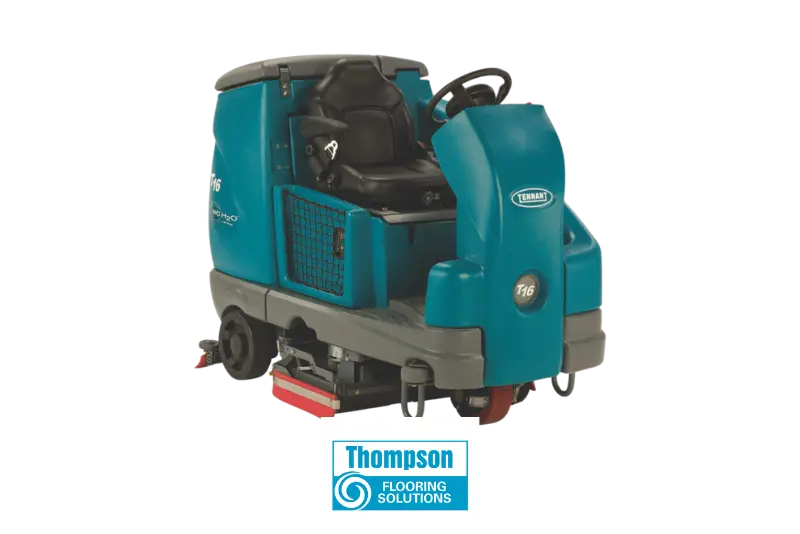
Why Maintenance Matters
Floor scrubbers are built to handle tough cleaning jobs, but like any piece of equipment, they need attention. Neglecting simple checks can lead to clogged hoses, dead batteries, or worn-out parts that bring your cleaning operation to a halt. Our team at Thompson Flooring Solutions has seen this firsthand. Many service calls we handle come down to overlooked basics, like a filter that was never rinsed or a battery that was left uncharged. With consistent care, you’ll avoid these problems and keep your scrubber running like new.What maintenance does a commercial floor scrubber require?
A commercial floor scrubber needs daily, weekly and long-term care: drain and rinse the recovery and solution tanks after every use, clean the brushes and squeegees, and wipe the machine down.
- · Weekly: check filters and hoses for clogs, clean the battery terminals and charge fully, and inspect the wheels.
- · Long term: replace worn brushes, pads and squeegees and book professional servicing for the motor and electrical system.
How often should you maintain your floor scrubber?
| Frequency | Task | Why it matters |
|---|---|---|
| After every use | Drain and rinse both tanks; clean brushes and squeegees; wipe the machine down | Stops odours, bacteria and streaking; keeps the next shift ready |
| Weekly | Rinse filters; check hoses for clogs; clean battery terminals and charge fully; top up water on lead-acid batteries | Protects water flow, cleaning performance and battery run-time |
| Monthly | Inspect wheels and casters; check squeegee blades for wear; look over seals and connections | Prevents poor pickup, hard steering and floor damage |
| As needed / long term | Replace brushes, pads and squeegees; book professional servicing for the motor and electrical system | Keeps results consistent and avoids expensive breakdowns |
Should You Rent or Own a Floor Scrubber?
Not every facility needs to invest in owning a machine. For many businesses, renting a floor scrubber is the smarter choice. Rentals save upfront costs, eliminate repair headaches, and give you access to the right model for each cleaning job.
At Thompson Flooring Solutions, we provide ride-on and walk-behind scrubbers, as well as scrubber-sweeper combos, all backed by flexible rental terms. That means less downtime and more peace of mind for your operations.
Maintenance by Machine Type
Common Problems and Quick Fixes
Maintenance vs Professional Servicing
In-house maintenance covers the routine: tanks, brushes, squeegees, filters, battery care and wear parts. Professional servicing takes over when a machine needs diagnostics, motor or electrical work, or a planned-maintenance (PM) program to catch failures before they happen. If your team is making repeated repair calls for the same machine, a PM schedule usually costs less than the downtime.
For repairs and planned maintenance, Thompson Flooring Solutions runs on-site floor scrubber repair and servicing with factory-trained technicians.
Keep Your Facility Clean and Productive
A well-maintained floor scrubber is the key to spotless, safe floors and fewer repair bills. Thompson Flooring Solutions has been supporting businesses across Alabama, Florida, and Tennessee for years with reliable rentals and expert advice.
Ready to keep your floors in top condition? Contact Thompson Flooring Solutions today to learn more about our floor scrubber rentals and maintenance support.
Ready to keep your floors in top condition?
Thompson Flooring Solutions provides commercial floor scrubber rentals, servicing and expert advice across Alabama, Florida, and Tennessee.
Request a Floor Scrubber Quote
FAQs About Floor Scrubber Maintenance
What maintenance does a commercial floor scrubber require?
Commercial floor scrubbers require daily, weekly and long-term maintenance. Drain and rinse the tanks and clean the brushes and squeegees after each use, check the filters, hoses and battery weekly, inspect the wheels and seals monthly, and replace wear parts and book professional servicing over time. Thompson Flooring Solutions provides commercial floor scrubber servicing and rentals across the Southeast US.
How often should commercial floors be cleaned with a scrubber?
Commercial floors should usually be scrubbed daily in high-traffic and industrial spaces, and a few times a week in lighter-use areas. Cleaning on a set schedule keeps floors safe and stops grime building up between deep cleans. Thompson Flooring Solutions rents commercial floor scrubbers and sweepers for facilities across the Southeast US.
How does regular use of a floor scrubber extend the life of my floors?
Regular use of a floor scrubber extends the life of your floors by removing the grit, oil and grime that grind down and stain sealed concrete and other hard surfaces over time. Cleaning consistently protects the finish, slows wear, and cuts the need for costly refinishing. Thompson Flooring Solutions supplies and services commercial floor scrubbers for facilities across the Southeast US.
Why is my floor scrubber leaving streaks?
A floor scrubber usually leaves streaks because the squeegee blades are worn or dirty, or the recovery tank is full or clogged. Wipe the blades, check for nicks, replace them if the edge is rounded, and empty the recovery tank. If you cannot figure out why your scrubber is streaking, Thompson Flooring Solutions offers floor scrubber servicing across the Southeast US.
Why is my floor scrubber not scrubbing properly?
A floor scrubber that is not scrubbing properly usually has a low or empty solution tank, a clogged solution line or filter, or worn brushes. Check the solution level, clear the line and filter, and replace the brushes when the bristles are short. If the problem continues, Thompson Flooring Solutions repairs and services commercial floor scrubbers across the Southeast US.
How do I drain the water from a floor scrubber?
To drain the water from a floor scrubber, empty the recovery tank first using its drain hose, then drain the solution tank, and rinse both out. Doing this after every use stops dirty water, residue and odors from building up. Thompson Flooring Solutions services and rents commercial floor scrubbers across the Southeast US.
When should I repair my floor scrubber instead of maintaining it?
You should repair a floor scrubber rather than just maintain it when it needs motor or electrical work, full diagnostics, or keeps breaking down, while routine wear parts like brushes and squeegees stay simple maintenance. Catching bigger faults early avoids costly downtime. Thompson Flooring Solutions provides on-site floor scrubber repair and planned maintenance across the Southeast US.
Do I need to maintain a rented floor scrubber?
Yes. You still handle basic daily care on a rented floor scrubber, like draining the tanks and rinsing the squeegees, but repairs and major servicing are the provider's responsibility. Thompson Flooring Solutions rents commercial floor scrubbers with servicing handled, for facilities across the Southeast US.